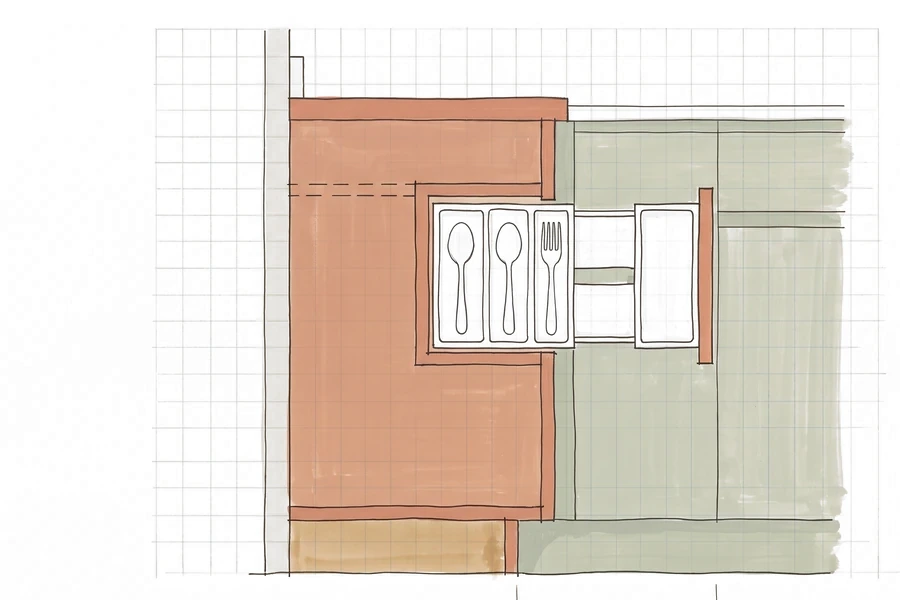
Measure three things inside the drawer: inside width, usable depth and the clear height with the drawer closed. Compare an organizer’s listed body size with those numbers, then check any minimum drawer height the maker states. A match is not a guarantee until you have checked obstructions and how the tray goes in.
This site lists 8 organizers that publish their body dimensions. The one worked through below is the example this guide keeps returning to; the same three measurements decide all of them.
As an Amazon Associate I earn from qualifying purchases. Links marked “paid link” go to Amazon; the dimensions shown come from the manufacturer and do not change with commissions.
Compare all 8 with your own numbers
Measure the space you can actually use.
Open the drawer and measure inside the box, from side to side and front to back. Keep the measurements in the same units as the organizer you are considering.
The decorative front is not the surface the organizer will sit on. Note anything that takes up space inside: a screw head, a sloping side, a runner or an existing divider.
Check above the organizer, too.
Measure the clear height with the drawer in its closed position. Then consider the things that will sit inside the tray: a ladle handle or a stack of utensils can rise above its sides.
A product’s height and the height of a filled organizer are different checks. A simple rectangle comparison does not prove that a drawer will close.
Some makers also state a minimum drawer height for the organizer as used, separate from the body height: a tray about 2½ in tall can require a 3¼ in drawer. The size check shows that requirement for each listed model and compares it with your raw measured height.
Choose the format after you measure.
Compare width, depth and height. Check whether rotating it is practical for your drawer and utensils.
Record the minimum and maximum width. A minimum width alone does not tell you how its expanded compartments will work.
Plan the combined layout and the space between bins. Individually small bins do not automatically form a usable arrangement.
Define the usable rectangle
Measure the narrowest usable inside width and depth, not the drawer front. A cabinet size is not a drawer size either: an 18-inch cabinet gives a drawer listed at 16½ inches inside. Look for runners, screw heads and tapered sides that reduce space. Use the height available when the drawer is closed.
Check how the item gets in
A footprint can appear to fit once inside while the opening prevents insertion. The checker asks for a separate opening-path confirmation rather than assuming the same dimensions describe both.
Allowances are not tolerances
The example quarter-inch allowance is a user-adjustable planning input. It is not a manufacturer installation specification. The actual item, contents and movement may require different clearance.
Frame-supported products need another check
Some organizers rest on the drawer frame rather than on the bottom. Do not treat their published exterior length as a simple required inside dimension without checking the support instructions. Three records on this site work that way, and what the size check can and cannot say about them is its own guide.
Example of a distinct support style: YouCopia manufacturer release describing DrawerFit. This is a research lead, not a product recommendation.
Where the example figures come from
The tray about 2½ inches tall that asks for a 3¼ inch drawer is a real record, not a made-up one. Joseph Joseph lists its DrawerStore Bamboo Compact Cutlery Organizer (SKU 85168) at "H6 x W12.2 x D39.8cm (H2½ x W5 x D15¾ inches)" and says it is "Suitable for drawers with a minimum height of 8cm (3¼ inches)." Those are two figures for one requirement and they are not the same height once converted, which is worked through across all four records that state a minimum in a guide of its own. us.josephjoseph.com (accessed 2026-09-08; evidence B-EV-18, B-EV-22)
What this guide can tell you.
This guide describes a measurement process. It is not a hands-on review and does not recommend a particular product. The drawings are the site’s own illustrations, not evidence of any hands-on test of the organizers they show.